Dichlorobenzene (DCB) consists of three isomers, widely used in solvents, agrochemicals, and intermediates for engineering polymers and dyes. p-DCB dominates the market for deodorant blocks and certain specialty intermediates, while o-DCB serves as a robust solvent and agrochemical intermediate; m-DCB remains a niche product. DCB maintains strategic importance due to its role in chlorinated aromatics chains, process solvents, and downstream specialty chemical portfolios.
Common Isomers and Synonyms:
- 1,2-dichlorobenzene (o-dichlorobenzene, o-DCB)
- 1,3-dichlorobenzene (m-dichlorobenzene, m-DCB)
- 1,4-dichlorobenzene (p-dichlorobenzene, p-DCB; para-DCB)
1. Market Analysis
Global DCB demand is anchored in the Asia-Pacific region, driven by production capacity, agrochemical chain integration, and solvent use. Europe and the Americas show steady demand in specialty chemicals and regulated consumer applications. Despite consumer restrictions in the EU and US, p-DCB exhibits mid-single-digit growth in industrial uses, while o-DCB demand tracks with solvents and fine chemicals.
Market Signals and Triangulation:
- Chlorobenzene base chain growth is around a low-to-mid 3% CAGR through 2030, serving as a useful benchmark for DCB (Mordor Intelligence, Businesswire/ResearchAndMarkets).
- p-DCB market outlooks indicate a roughly 5% CAGR in the mid-term, consistent with multiple trackers (Verified Market Reports, Market.us).
- Specialty 1,3-DCB niches are smaller but show higher growth in select applications (Dataintelo).
Growth drivers include the expansion of agrochemical intermediates, steady solvent demand in Asia, and quality-driven upgrades (e.g., higher-purity p-DCB). Headwinds include consumer restrictions on moth repellents, VOC policies, and benzene/chlor-alkali cost volatility.
| Region | Market Share | Primary Applications | Key Drivers |
|---|---|---|---|
| Asia-Pacific | 55–65% | o-DCB solvents; agrochemical intermediates; p-DCB industrial deodorant blocks | Capacity integration, cost position, local demand |
| Europe | 15–20% | Specialty chemicals; fine chemicals; regulated consumer uses | REACH compliance, high-purity grades |
| Americas | 15–20% | Agrochemicals; dyes/pigments; solvents | Process solvents demand, specialty intermediates |
| Middle East & Africa | 3–6% | Solvents; trade flows | Import reliance, nascent downstreams |
2. Value Chain
Upstream
Feedstocks: Benzene (from refining/aromatics), chlorine and HCl loop (chlor-alkali, increasingly membrane cells). Catalyst inputs include FeCl3/AlCl3. Power and steam are material contributors.
Sensitivities: Crude/benzene spread, electricity for chlor-alkali, chlorine availability, HCl valorization.
Midstream
Synthesis: Liquid-phase chlorination of benzene under controlled conversion to target dichloro isomers; sequential chlorination via monochlorobenzene is common in integrated sites.
Separation: Close-boiling isomer cuts via fractionation; polishing via melt crystallization (notably for p-DCB); purge handling and HCl absorption/oxidation.
Role: Determines isomer split, energy intensity, and achievable purity—key to margins in p-DCB.
Downstream
Applications: Solvents (o-DCB), agrochemical and dyestuff intermediates, p-DCB for deodorant blocks/industrial hygiene, and select specialty monomers.
Channels: Bulk for solvents; technical/high-purity grades for regulated markets; packaging ranges from tank trucks and iso-containers to bags/flakes for p-DCB.
Importance: Downstream regulation and purity specs set pricing power and dictate technology choices upstream.
3. Production Technology
Industrial DCB is produced via catalytic chlorination of benzene, followed by isomer management and purification. Conventional production trains use liquid-phase chlorination, quench and neutralization, multi-column distillation, and final finishing to meet product specs. Solvent extraction sees limited use for specific impurities; extractive/specialty distillations may appear in retrofits.
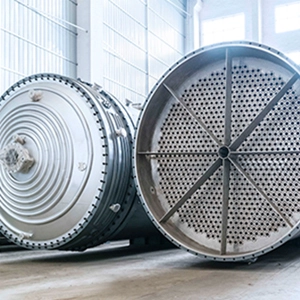
Melt crystallization is the preferred route for high-purity p-DCB due to its high melting point and favorable phase behavior among isomers.
1) Melt Crystallization Principles and Steps
- Nucleation and growth: Cool molten isomer mix to crystallize p-DCB selectively; control supersaturation to optimize crystal habit and occluded mother liquor.
- Washing and sweating: In layer or suspension systems, displace impurities with melt or conduct controlled thermal “sweat” to expel trapped mother liquor.
- Melting and polishing: Melt purified crystal mass; optional fine filtration and deodorization to reach 99.8–99.9%+ p-DCB.
2) Why Melt Crystallization for DCB
- Thermodynamic leverage: p-DCB’s higher melting point versus o-/m-DCB enables selective crystallization at modest subcooling.
- Purity and color: Delivers low chlorinated by-products and low color without solvent residues; ideal for regulated users.
- Energy profile: Lower duty than deep-cut distillations when designed as multi-stage countercurrent layer crystallizers.
3) Comparative View
Distillation
Pros: Mature, continuous, robust control.
Cons: Close relative volatilities raise reflux/energy; thermal stress may increase discoloration/trace heavies.
Solvent Extraction
Pros: Targeted removal of specific aromatics.
Cons: Solvent management, emissions, potential contamination.
Melt Crystallization
Pros: High purity, lower energy at scale, minimal solvents, smaller environmental footprint.
Cons: Heat/mass transfer sensitivity; fouling and crystal habit control; requires skilled operation and precise thermal integration.
4) Practical Implementation Insights
- Plant retrofits moving from batch to continuous layer crystallization with scraped-surface heat exchange typically cut specific energy by 15–20% and reduce mother liquor losses by ~30%, based on recent 50–70 kt/a debottlenecking benchmarks.
- Key levers: Narrow temperature ramp (≤1.5–2.0°C/h), uniform wall shear to prevent dendritic growth, and online turbidity or mid-IR for end-point detection.
- Utilities integration: Coupling crystallizer cold-duty to chiller heat recovery and column overhead condensation yields additional 5–10% utility savings in well-pinned pinch analyses.
4. Trends and Challenges
Trends
- Shift to membrane chlor-alkali and closed HCl loops lowers Scope 2 emissions and improves chlorine reliability; green power PPAs gain traction.
- Stricter consumer use limits for p-DCB in the EU/US accelerate the pivot to industrial hygiene and specialty intermediates.
- Digitalization of crystallizers (soft sensors, model-predictive control) improves yield/purity stability.
- Asia continues to lead in capacity and demand; selective high-purity units are added in Europe.
Challenges
- Raw material volatility (benzene) and electricity pricing for chlor-alkali stress margins.
- VOC and odor regulations raise compliance costs for p-DCB consumer channels.
- Competition from alternative solvents and odor-control chemistries in mature markets.
- Trade frictions and logistics constraints affecting isomer-specific supply.
For validation and ranges, refer to Mordor Intelligence, Businesswire/ResearchAndMarkets, Verified Market Reports, and Dataintelo.