Dimethyl Terephthalate (DMT), as a key monomer in the polyester industry chain, is widely used in packaging, automotive, textile and other fields, and can produce key materials such as polyester fibers, resins, films and engineering plastics.
Although the DMT industry once stagnated due to the development of Purified Terephthalic Acid (PTA) technology in the early stage, with the growth of demand for special functional polyesters, it has regained attention as an upstream raw material, especially showing unique advantages in synthesizing monomers for high-performance polyester materials. Under the bottleneck of traditional production technology, the innovation of melt crystallization process provides a key driving force for industrial upgrading.
I. Global Market Analysis
Market Size and Growth Trend
The global DMT market presents the characteristic of “volume-price differentiation”: the market value reached 1.143-1.5 billion US dollars in 2024, with an output of 788.93 thousand tons in 2023. It is expected that the physical volume CAGR will be -3.14% from 2023 to 2028. The long-term value growth is clear, with the CAGR expected to be 4.9% from 2024 to 2037, and the market size will increase from 1.16 billion US dollars to 2.16 billion US dollars.
In the regional pattern, China leads the growth: the demand will increase from 11.5 million tons to 14 million tons from 2025 to 2030, with its global share rising to 40% and the capacity utilization rate remaining above 91%. The European and American markets, however, show a moderate contraction due to the substitution effect of PTA.
Regional and Competitive Landscape
Global production capacity is concentrated in North America, Asia-Pacific and Europe. International leading enterprises dominate the technical field: Oxxy Nova ranks first with a 19% revenue share, and Invista, Eastman, etc. have built competitive advantages through patent barriers and large-scale production.
II. Industrial Chain Structure
The DMT industrial chain presents a typical “petroleum-chemicals-materials” vertical integration feature.
Upstream Raw Materials
- p-Xylene (PX): The core raw material. Fluctuations in PX market prices directly affect the production cost of DMT.
- Methanol: Another important raw material used in the esterification reaction.
- Catalysts and energy: Metal catalysts such as cobalt and manganese, as well as steam, electricity, etc.
Core Production Process – Witten Method
The industrial production of DMT mainly adopts the classic Witten-Hercules process. This process uses PX and methanol as raw materials to produce DMT through two steps: oxidation and esterification.
Chemical reaction steps:
- Oxidation: PX is oxidized by air under the action of catalysts (cobalt and manganese salts) to generate p-toluic acid (PT acid) and intermediate products.
- Esterification: The oxidation products react with methanol to finally generate crude DMT.
Downstream Applications
- Direct downstream: High-purity DMT.
- End applications:
- PBT resin -> Automotive industry, electronic appliances, optical fiber sheathing.
- Special polyesters -> High-performance fibers, packaging materials, hot-melt adhesives.
- Plasticizers/solvents -> Chemical additives, high-end coatings.
III. Purification Process is the Core of Value
Crude DMT produced by the Witten method contains various impurities, such as aldehydes, colored substances, metal ions, isomers (such as dimethyl isophthalate DMI), etc. These impurities will seriously affect the performance of downstream polymers (such as molecular weight, hue, thermal stability). Therefore, purification technology is the key to determining the quality, cost and market competitiveness of DMT products.
DMT production technology is undergoing a paradigm shift from “high-energy-consuming purification” to “precision separation”.
Disadvantages of Traditional Distillation Technology
- Extremely high energy consumption: DMT has a high boiling point (288°C), and high-temperature distillation requires a lot of steam and electricity.
- Risk of thermal degradation: Long-term high-temperature operation may cause partial decomposition of DMT, producing new impurities and affecting the product’s color number (b value).
- Limitations in separation efficiency: For impurities with very close boiling points (such as DMT and DMI), conventional distillation has high separation difficulty and low efficiency, making it difficult to stably produce ultra-high-purity products.
It is against this background that melt crystallization technology, as a more advanced and efficient separation and purification method, has emerged, and the DODGEN process is an outstanding representative of it.
IV. Melt Crystallization Technology
Melt crystallization is a physical process for separation and purification based on differences in the freezing points of substances. DODGEN’s melt crystallization technology enjoys a high reputation in the global chemical purification field, and its application in DMT refining is a model.
1. Process Principle
DODGEN melt crystallization is a dynamic cycle process, mainly including the following steps:
- Crystallization: The crude DMT melt is slowly cooled, and high-purity DMT molecules are preferentially crystallized and precipitated in the crystallizer, while impurities remain in the mother liquor.
- Sweating: After crystallization is completed, the temperature is slowly raised to near the melting point. At this time, the eutectic impurities wrapped in or attached to the surface of the crystal particles will melt first and be discharged, further purifying the crystal layer.
- Melting: The pure crystal layer after sweating treatment is completely melted to obtain high-purity DMT products.
- Mother liquor treatment: The discharged mother liquor is rich in impurities and can be returned to the previous process or treated separately.
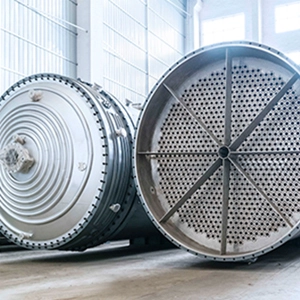
The entire process is usually completed in a falling film crystallizer or static crystallizer, and can realize fully automatic continuous or batch operation.
2. Outstanding Advantages Compared with Traditional Distillation
Ultimate Purity
It can effectively remove impurities with similar boiling points (such as DMI), and the product purity can reach more than 99.99% with excellent hue (very low b value), far exceeding the level achievable by distillation processes. This is crucial for the production of high-end PBT and special polyesters.
Significantly Reduced Energy Consumption
The operating temperature of the crystallization process is much lower than that of distillation, and there is no need for latent heat of vaporization (only latent heat of fusion is required, whose value is much smaller than latent heat of vaporization). Practice has proved that the energy consumption of the DODGEN melt crystallization process can be reduced by 50% to 70% compared with traditional distillation, with significant economic benefits.
Environmentally Friendly
Low-temperature operation avoids thermal decomposition and reduces the generation of three wastes (waste gas, waste water, solid waste). At the same time, low energy consumption also indirectly reduces carbon emissions, which is in line with the concept of green chemical industry development.
Operational Safety
The whole system operates at low temperature, normal pressure or vacuum, avoiding safety risks caused by high temperature and high pressure.
3. Value to the Industry
The DODGEN melt crystallization process is not just a separation technology, but also a strategic tool to improve the grade of DMT products and enhance the core competitiveness of enterprises. Manufacturers adopting this technology can:
- Stably produce the highest quality DMT and enter the more profitable high-end market.
- Significantly reduce production costs and maintain cost advantages in the differentiated competition with the PTA route.
- Meet the increasingly stringent requirements of downstream high-end customers for material performance and establish long-term and stable cooperative relationships.
- Realize green, energy-saving and sustainable development in the production process.