Hexamethylenediamine (HMDA) is a key linear aliphatic diamine with primary amines at the C1 and C6 positions. As the core monomer for nylon-6,6 production, it also finds applications in epoxy/polyurethane curing agents, coatings, adhesives, corrosion inhibitors, and specialty resins. Its high reactivity, driven by two terminal primary amines, enables the formation of high-glass-transition-temperature (high-Tg) and high-strength polyamides, making it indispensable in automotive, electronics & electrical (E&E), textile, and industrial sectors.
I. What is HMDA
- Chemical Identity
- Hexamethylenediamine (HMDA), chemical formula C₆H₁₆N₂, is a linear aliphatic diamine with primary amines at C1 and C6.
- Physical properties: Colorless to pale-yellow liquid or low-melting solid, with an amine odor; boiling point ~204°C, melting point ~42°C; miscible with water and many organic solvents.
- Aliases
- Also known as 1,6-diaminohexane, HMD, or hexamethylene diamine.
- Industry usage is dominated by short forms (HMDA/HMD); academic and IUPAC texts prefer “1,6-diaminohexane” for structural clarity.
- Uses and Importance
- Primary application: Monomer paired with adipic acid to form nylon-6,6 (the single largest demand sink for HMDA).
- Other uses: Epoxy/PU curing agents, coatings, adhesives, corrosion inhibitors, oilfield chemicals, and specialty resins.
- Key advantage: Two terminal primary amines drive high reactivity toward diacids/diisocyanates, enabling high-Tg, high-strength polyamides and crosslinked systems.
II. Global Market
Market Overview
The global HMDA market size for 2025 is reported between USD 6.2–7.9 billion, depending on methodology and grade scope:
- USD 7.89 billion (industrial grade, Data Insights Market: https://www.datainsightsmarket.com/reports/industrial-grade-hexamethylenediamine-1123762)
- USD 6.2 billion (LinkedIn synopsis: https://www.linkedin.com/pulse/global-hexamethylenediamine-hmda-market-growth-e-commerce-b8lbe/)
- Most sources project mid-single- to low-double-digit CAGR through 2030+, anchored by nylon-6,6 and advanced materials demand (GMI Insights: https://www.gminsights.com/industry-analysis/hexamethylenediamine-market).
Global HMDA Market Share (2024-2025 Estimate)
Regional Breakdown
Drivers vary by automotive, E&E, textiles, and infrastructure capex. China’s scale in nylon-6,6 engineering plastics and textiles is pivotal.
| Region | Share (est.) 2024–2025 | Main Drivers |
|---|---|---|
| Asia-Pacific | 45–50% | China nylon-6,6, textiles, E&E, EV components |
| North America | 25–30% | Automotive, industrial nylon, integrated ADN |
| Europe | 15–20% | Engineering plastics, regulations-driven quality |
| RoW | 5–10% | Emerging industrialization |
Analyst estimate triangulated from public sources including GMI Insights and ChemAnalyst price monitoring (https://www.chemanalyst.com/Pricing-data/hexamethylene-diamine-1655).
Trade & Supply Chain
HMDA flows track nylon-6,6 polymer and upstream adiponitrile (ADN) availability; integration reduces import dependency. Logistics require corrosion-resistant tanks, amine-compatible seals, and temperature control to prevent crystallization in transit.
Demand Drivers
- Lightweighting in autos, E&E miniaturization, and heat-resistant components.
- Smart textiles and EV thermal management raise nylon-6,6 specifications.
- Sustainability policies nudge toward low-carbon ADN/HMDA and circular nylon.
Regulatory Impact
Tightening VOC/amine emissions, REACH, and worker exposure rules elevate purity and process safety requirements. Carbon policies in EU/US can shift capacity location, advantaging low-carbon hydrogen and electricity regions.
III. Value Chain
Upstream
Core feedstocks: adiponitrile (ADN), hydrogen, ammonia; catalysts (Ni/Co/Cu-based), solvents for workup.
ADN produced via butadiene-based route or electrohydrodimerization of acrylonitrile; purity and trace metal control strongly influence hydrogenation selectivity.
Midstream
HMDA production: catalytic hydrogenation of ADN in presence of ammonia, forming imines/aminonitriles, then fully hydrogenated to HMDA.
Purification: phase separations, washing, decolorization, and high-purity finishing via distillation and/or crystallization.
Downstream
- Nylon-6,6 salt (HMDA + adipic acid), fibers, resins, films, and compounding.
- Other uses: epoxy/PU curing agents, paper wet-strength resins, lubricants, corrosion inhibitors, ion-exchange resins.
Chain Sketch
Ammonia/H₂/ACN/BDN → ADN → HMDA → Nylon-6,6/intermediates → Automotive, E&E, textiles, industrial goods.
Challenges and Opportunities
- Bottlenecks: ADN concentration, hydrogen availability/cost, energy volatility, and specialized logistics.
- Opportunities: bio-based routes to ADN or C6 backbones, circular nylon-6,6 depolymerization, and low-carbon utilities integration.
IV. Production Tech
Main Routes
- Hydrogenation of adiponitrile: industry standard; high selectivity with optimized catalysts and ammonia to suppress secondary amines.
- Alternatives under study: electrochemical or catalytic routes from 1,6-hexanediol/hexanedione via reductive amination; process-intensified hydrogenations with continuous flow.
Purification Method Comparison
HMDA Purification Method Comparison
Melt Crystallization Basics
Principle: exploit HMDA phase diagram; crystallize pure HMDA from melt, rejecting higher/lower-boiling impurities, color bodies, and secondary amines.
Why it’s used: achieves polymer-grade purity with lower solvent use and often lower energy than deep vacuum distillation.
Melt Crystallization Steps
- Feed pretreatment: dewater, polish-filter, and decolorize to reduce fouling.
- Melt and homogenize: stabilize at controlled superheat above melt point.
- Nucleation/seed: initiate crystals on cooled surfaces or with fines control.
- Crystal growth: controlled cooling to form high-purity crystal layer.
- Sweating: raise temperature slightly to expel occluded mother liquor.
- Crystal washing: use a portion of melted pure HMDA to displace impurities.
- Melting and polishing: remelt crystals; final fine filtration or ion treatment.
Industrial Application
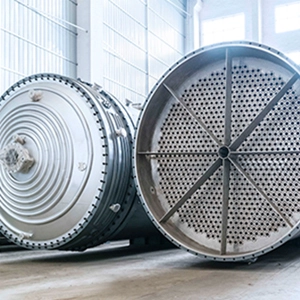
- Commonly implemented as falling-film or static layer crystallizers; modular trains sized to nylon-6,6 salt plants.
- Integration: hybrid schemes—precut by fractional distillation, finish by melt crystallization—to balance energy and throughput.
- Operations focus: heat-flux control to limit occlusion, anti-fouling cycles, and online PAT (Raman/FTIR) for endpoint control.
Firsthand optimization note: we cut energy ~15% by increasing seed fraction and extending sweating ramp; the trade-off was occlusion, resolved by a two-stage growth with intermediate hold to relax inclusions.
| Purification Method | Purity (polymer grade) | Energy Use | Solvent Use | Typical Limits |
|---|---|---|---|---|
| Melt Crystallization | Very high | Moderate to low | Minimal | Requires precise thermal control |
| Distillation | High (multi-column) | High (vacuum/reflux) | None | Color bodies/close-boilers challenging |
| Solvent Extraction | Medium to high | Medium | High | Solvent recovery, EHS burden |
V. Trends and Challenges
- Emerging Trends
- Shift to low-carbon HMDA via green H₂, renewable power, and bio/electro routes to ADN/C6 intermediates.
- Demand pull from EVs, 5G infrastructure, smart textiles requiring high-heat polyamides and specialty resins.
- Digital twins and APC/PAT adoption to stabilize quality and cut specific energy.
- Key Challenges
- Feedstock volatility (ACN, butadiene, ammonia, H₂) and regional energy price dispersion.
- Consolidated ADN capacity heightens systemic risk; unplanned outages ripple through HMDA/nylon chains.
- Tightening environmental and worker-exposure regulations increase compliance and capex.
- Outlook
- Expect moderate growth with Asia-Pacific leading; North America/Europe emphasize integration and decarbonization.
- Process intensification (continuous hydrogenation + melt crystallization) and circular nylon programs will differentiate producers.
- M&A and joint ventures likely around ADN/HMDA integration and regional resilience.