Industrial fatty acids (also called oleochemicals, long-chain fatty acids, or carboxylic acids) are derived from natural oils and fats and form the backbone for surfactants, lubricants, plasticizers, and personal care ingredients. As a key class of oleochemicals, they play a critical role in diverse industries, from detergents to pharmaceuticals, with a growing focus on bio-based and sustainable applications.
I. Market Overview
Global market sizing varies by scope. Precedence Research estimates USD 34.2B in 2025, reaching USD 53.47B by 2034 (mid-single-digit CAGR) https://www.precedenceresearch.com/fatty-acids-market. Global Market Insights reports USD 32.3B in 2024, projected to USD 51.2B by 2034 https://www.gminsights.com/industry-analysis/fatty-acids-market.
Some firms model a broader scope including derivatives and nutraceuticals; The Business Research Company cites USD 148.9B (2024) to USD 161.4B (2025) https://www.thebusinessresearchcompany.com/report/fatty-acids-global-market-report. For industrial buyers, the narrower industrial fatty acids definition (C8–C22 fractions and derivatives) is most decision-relevant.
Growth is underpinned by soaps and detergents (largest volume), personal care, lubricants and metalworking fluids, food emulsifiers and preservatives, pharmaceuticals, and polymer additives. Rising demand for bio-based surfactants, low-VOC solvents, and biodegradable plastics further supports volumes.
Regional structure is APAC-centric due to feedstock proximity and integrated oleochemical complexes in Southeast Asia. Europe and North America contribute high-value specialty grades and downstream formulation demand.
| Region | Share/Relevance (approx.) |
|---|---|
| Asia-Pacific | 45–50% volume; largest supply base (Malaysia/Indonesia) and growing demand |
| Europe | 20–25%; strong personal care, pharma, specialty derivatives |
| North America | 15–20%; lubricants, HI&I cleaning, food, pharma |
| Latin America | 5–8%; soybean/tallow feedstock, growing detergent demand |
| Middle East & Africa | 5–7%; emerging downstream, selective capacity |

Regional Market Share (by Volume)
II. Value Chain
Upstream focuses on natural oils and fats: palm oil and palm kernel oil (Indonesia, Malaysia), coconut oil (Philippines), soybean oil (Brazil, U.S.), tallow (U.S., EU, Australia), and smaller volumes of rapeseed and sunflower. Feedstock sustainability (RSPO, deforestation-free) is increasingly mandatory for EU and multinational buyers.
Midstream converts triglycerides to fatty acids via hydrolysis (fat splitting) or saponification, followed by distillation, hydrogenation, and fractionation. Outputs include crude fatty acids, refined/distilled fractions (C8–C18, oleic, stearic), and co-product glycerin.
Processing steps (typical continuous plant):
- Feed pretreatment and drying.
- Hydrolysis at elevated temperature/pressure; phase separation of fatty acids and glycerin.
- Vacuum distillation and fractionation to cut by carbon number and unsaturation.
- Optional hydrogenation/isomerization; winterization; deodorization; bleaching and polishing filtration.
Downstream applications span detergents and cleaners (soap noodles, surfactants), lubricants and metalworking fluids (esters), plasticizers and polymer additives, personal care and cosmetics (emollients, surfactants), food additives (emulsifiers, antifoams), and pharmaceuticals (excipients, active precursors).
Emerging uses include green solvents (fatty acid methyl esters), biodegradable plastics (PHA/PBS compatibilizers, feedstock for dimer/azelaic acids), and specialty chemicals for battery electrolytes and agrochemicals.
III. Core Technologies
Production methods include hydrolysis (fat splitting), saponification (soap route), hydrogenation (saturation control), fractionation (by chain length/iodine value), and distillation (purification and cut definition). Enzymatic hydrolysis is gaining traction for mild conditions and selectivity.
Distillation is the workhorse for purity and specification control. Fatty acids are separated by boiling point under deep vacuum to protect heat-sensitive unsaturates and minimize color formation.
Industrial setups use:
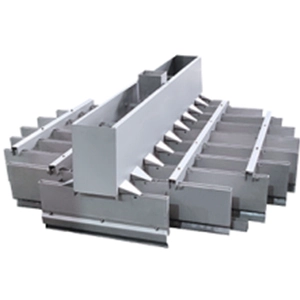
- Vacuum distillation columns (structured packing or sieve/valve trays) operating at 5–20 mbar, with side draws for C8–C12, C14–C16, C18 fractions.
- Molecular (wiped-film/short-path) distillation for high-purity oleic, conjugated linoleic, or specialty monomers; very low residence time reduces thermal degradation.
- Falling-film and thin-film evaporators upstream for light-ends removal and energy staging.
Advantages: high purity and narrow cut distributions, scalable continuous operation, proven reliability. Challenges: energy intensity, fouling/polymerization of unsaturated streams, color/odor control, and maintaining deep vacuum integrity across large columns.
Recent improvements adopted in competitive plants:
- Heat integration with multiple-effect evaporation, thermal/mechanical vapor recompression, and column-to-column heat coupling to cut steam use by 15–30%.
- Advanced process control with inline FTIR/near-IR and GC-FID feedback for cut point optimization; model predictive control stabilizes side-draw specs.
- Structured packing with low pressure drop enabling deeper vacuum; dry screw vacuum pumps reducing utility water use versus steam ejectors.
- Hybrid purification lines: pre-polishing by adsorption/membrane, then short-path finishing to meet cosmetic/pharma color and peroxide limits.
Practical distillation tips from commissioning and troubleshooting:
- Dry feed to <0.05% water and keep dissolved oxygen minimal; both diminish color stability and increase acid value drift. Nitrogen blanketing helps.
- Control residence time in reboilers; use thin-film reboilers for unsaturate-rich feeds to avoid polymeric fouling and yield loss.
- Set condenser temperatures to avoid solidification of high-melting stearic cuts while maximizing reflux; trace heating prevents line blockages.
- Monitor iodine value and color (Lovibond/Gardner) online per cut; integrate with side-draw flow control to maintain spec during feed variability.
- Schedule hot-oil CIP with antioxidant passivation; fouling increases delta-P and vacuum setpoint drift, worsening energy use and color.
Other relevant technologies include enzymatic splitting (lower temp, fewer side reactions), membrane separations for preconcentration of free fatty acids, and catalytic ozonolysis routes to dibasic acids (e.g., azelaic) from oleic as specialty growth niches.
Core Technology Improvement Effects
IV. Trends and Challenges
Emerging trends:
- Bio-based, certified sustainable feedstocks (RSPO, deforestation-free) and Scope 3 decarbonization across the industrial fatty acids value chain.
- Expansion in green chemicals, bioplastics compatibilizers, and high-purity cosmetic/pharma grades, favoring advanced distillation and short-path finishing.
- Digitalization: inline analytics, APC, and energy-integration retrofits to lower OPEX and emissions.
Key challenges:
- Feedstock price volatility (palm, coconut, soybean) and policy shocks; hedging and flexible feed capability are essential.
- Environmental and regulatory pressure on land use, wastewater, odors, and GHG; BAT compliance and LCA transparency required for EU and global brands.
- Logistics and trade uncertainty impacting APAC-to-EU/US lanes; regionalization and dual-sourcing to harden supply.
Sources: Precedence Research, Global Market Insights, TBRC, Straits Research.