Introduction
Xylenol, also known as dimethylphenol, refers to six positional isomers of phenol bearing two methyl substituents, commonly named 2,3-, 2,4-, 2,5-, 2,6-, 3,4-, and 3,5-xylenol.
Authoritative references classify 2,6-xylenol and 3,5-xylenol (meta-xylenol) as key intermediates in polymer, antioxidant, and specialty chemical manufacture (PubChem; ChemSpider; IUPAC naming).
Principal applications include engineering resins (polyphenylene ether based on 2,6-xylenol), hindered phenolic antioxidants and stabilizers, epoxy and novolac resins, agrochemical and pharmaceutical intermediates, and performance additives.
Market Overview
The global market for xylenol (dimethylphenol) is mid-sized, specialty-driven, and anchored by 2,6-xylenol for engineering plastics and 3,5-xylenol for fine chemical routes.
Recent datapoints from reputable industry trackers show variation by scope and methodology:
- Global xylenols market value (2025): USD 3.3 billion; CAGR 4.3% (2025–2034) (GMI Insights).
- Alternative estimate: USD 2.5 billion (2025) (LinkedIn brief; directional, less formal).
- 3,5-dimethylphenol segment: USD 115 million (2025) to USD 143 million (2031), CAGR 3.2% (QYResearch).
Geographic distribution and demand drivers
- Regional split (indicative): Asia-Pacific 45–50%, North America 20–25%, Europe 20–22%, Rest of World 8–12%.
- Demand drivers: PPE/PPO resins (electrical, automotive), antioxidants and stabilizers in polymers, fine chemicals for agro/pharma, and specialty solvents/intermediates.
Isomer segmentation (directional, by value)
- 2,6-xylenol: 50–60% share; core monomer for poly(2,6-dimethyl-1,4-phenylene oxide).
- 3,5-xylenol: 5–10%; niche fine chemicals and pharma routes.
- Other isomers: balance for resins, antioxidants, and tailored intermediates.
Outlook is supported by electrification, lightweighting, and high-heat polymer demand, while regulatory stringency and energy costs temper near-term growth.
Supply Chain
Xylenol industry supply chain spans phenolic aromatics and close-boiling isomer separations, with value realized through purity and consistent specs.
Upstream
- Feedstocks: phenol (cumene route), o-/m-cresol (coal tar distillates and synthetic routes), toluene, methanol, and catalyst systems (zeolites, solid acids).
- Constraints: phenol and methanol price volatility, coal tar variability, and energy input costs.
Midstream
- Core operations: selective methylation of cresols to xylenols, isomer management, vacuum distillation, solvent/extractive distillation, and crystallization (solution and melt).
- Utilities and EH&S: phenolic wastewater treatment, fugitive emissions control, and occupational exposure compliance.
Downstream
- Major outlets: PPE/PPO engineering resins, hindered phenolic antioxidants and stabilizers, epoxy/novolac resins, agrichem and pharma intermediates.
Structured flow
Phenol/cresols → selective methylation → crude xylenol mix → isomer separation → high-purity isomers → formulated downstream products → converters/end users.
Case example (disruption and mitigation)
- In 2022–2023, European phenol tightness and energy shocks constrained cresol availability, tightening xylenol offers and lengthening lead times.
- Mitigations that worked: dual-sourcing phenol/cresol, hedging methanol exposure, deploying toll melt-crystallization capacity in Asia for fast-turn purification, and holding 4–6 weeks of PPO-grade 2,6-xylenol safety stock at regional DCs.
Regulatory and logistics
- REACH/TSCA scrutiny on phenolics and wastewater phenol/COD.
- IMO packaging for phenolics and regional hazmat trucking rules influence delivery cycles and cost-to-serve.
Production Technologies
Commercial xylenol production centers on alkylation/methylation chemistry followed by energy-efficient isomer purification.
Synthesis routes
- Methylation of cresols with methanol over solid acids (e.g., ZSM-5, modified mordenite, alumina) to produce targeted xylenols; o-cresol → 2,6-xylenol; m-cresol → 3,5-xylenol by kinetic/shape selectivity.
- Alternative routes include alkylation of phenol followed by isomer management; process selection depends on feedstock slate and catalyst IP.
Separation and purification
- Close-boiling isomer cuts require deep vacuum distillation, extractive distillation (e.g., glycols), or crystallization.
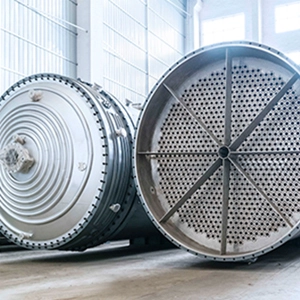
- Melt crystallization has become preferred for high-purity 2,6- and 3,5-xylenol because it avoids solvents and excels at fine isomer discrimination.
Melt crystallization principle
- Fractional solidification of the molten feed exploits different solid-liquid equilibria and segregation coefficients (k < 1 for impurities).
- Implementations include static layer crystallization with wash columns and suspension crystallization; commercial systems are offered by established vendors (e.g., Sulzer Chemtech).
Advantages vs. distillation
- 99.8%+ purity with minimal color and low oligomer; strong decolorization without adsorbents.
- Lower energy for close-boiling, thermally sensitive isomers; small solvent inventory; compact footprint.
- Scalable from 1–5 kt/a modules; hybridized with front-end distillation to reduce column duty.
Key operating parameters
- Supercooling: 5–15 K below melting point to balance growth and occlusion.
- Cooling rate: 0.1–0.5 K/min to form dense layers; layer thickness 3–10 mm.
- Wash ratio: 0.1–0.3 of crystal mass; final melt filtration to remove fines.
- Typical melting points: 2,6-xylenol ~45–46°C; 3,5-xylenol ~63–65°C; parameters tuned per isomer system.
Step-by-step workflow (static layer with wash column)
- Preheat and dehydrate crude xylenol feed; charge to crystallizer at controlled melt temperature.
- Nucleate and grow crystal layer on cooled surfaces; recirculate mother liquor.
- Drain enriched mother liquor; compact and wash crystal bed counter-currently.
- Melt purified crystal layer; send to polishing hold tank; analyze (GC, color).
- Recycle mother liquor to upstream fractionation or re-crystallization loop.
Recent developments
- Continuous wash-column designs with heat integration; PAT (in-line Raman/FTIR) for end-point control.
- Hybrid distillation–melt crystallization trains cutting energy 20–40% versus all-distillation in isomer service.
- IP space documents optimized catalysts for cresol methylation and integrated purification (see patents and Ind. Eng. Chem. Res.; Handbook of Industrial Crystallization).
Trends and Challenges
Growth drivers
- Electrification and e-mobility boosting PPE/PPO; demand for high-heat, low-dielectric polymers; shift to solvent-free purification such as melt crystallization.
Regulatory pressure
- Tighter effluent phenolic limits, REACH/TSCA updates, and Scope 3 emissions reporting pushing energy- and solvent-minimizing processes.
Competition
- Alternative engineering plastics (PA, PEEK, PPS blends) and process substitutions in antioxidants; need to differentiate on purity and carbon intensity.
Feedstock volatility
- Phenol, methanol, and coal tar swings; mitigation via hedging, dual-sourcing, and recycle integration.
Innovation outlook
- Digital twins for crystallization control, continuous wash columns, and hybrid separations to de-risk scale-up and lower OPEX.